History of Wydad Athletic Club
The Wydad Athletic Club, also known as Wydad or WAC, is one of Morocco’s most iconic clubs. Founded in 1937 in Casablanca, the club is renowned for its passion, resilience, and successes.
Nicknamed "Le Wydad," the club is known for its colors: red and white. Home games take place at Stade Mohamed V, also called Stade d’Honneur or Donor, a legendary stadium that has witnessed many of the club’s feats.
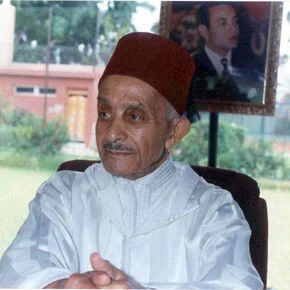
Wydad Athletic Club was created by a group of intellectuals and young resistants during the French occupation of Morocco in 1937, notably the late Mohamed Benjelloun. It started with a water polo team before forming its football section in 1939, with support from Father Jégo.
The club quickly climbed the ranks, reaching the first division of the Moroccan championship in 1942 and winning its first major trophy in 1948, which it held for four years. During this period, Wydad also dominated Maghreb football by winning three North African Championships, two North African Supercups, and one North African Cup.
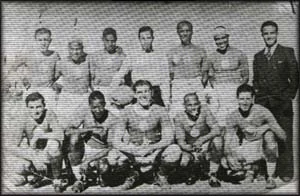
In 1956, Morocco gained independence, and Wydad became the first club registered with the Royal Moroccan Football Federation with registration number: 1. The club even won the Independence Cup by beating FC Maghreb Aksa in Tangier with a goal by Abdelhak Kadmiri on December 9, 1956.
Until 1969, Wydad continued its journey by winning eight championships but never managed to win the Throne Cup despite reaching four finals. One of these ended controversially in 1957, when the cup was awarded to Mouloudia d’Oujda on the grounds that they scored first, while the match had ended in a 1-1 draw. According to the rules at the time, the match should have been replayed.
During the 1969/1970 edition of the Cup, Wydad reached the final to face Renaissance de Settat, after beating Hassania d’Agadir, Difaâ Hassani El Jadidi, and Maghreb Fassi in the semi-final. The semi-final was fiercely contested, with a first 1-1 draw requiring a replay. Wydad qualified by winning the second match 1-0.
This year, Wydad was determined to win the title, especially since the match was played in front of Wydad supporters at Stade d’Honneur and in the presence of King Hassan II.
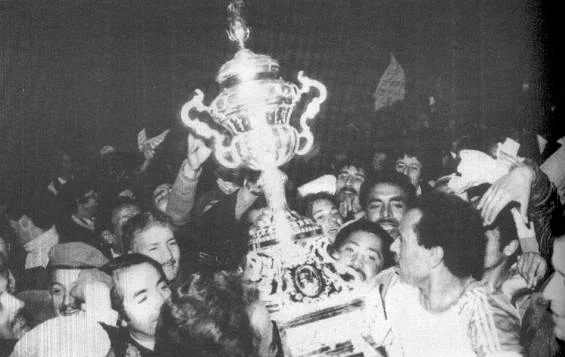
The year of this final, Wydad was resolute to claim the title, especially playing before its passionate fans at Stade d’Honneur and in the presence of King Hassan II. After 90 minutes, an explosion of joy erupted.
Since then, Wydad Athletic Club has won eight more Throne Cups, bringing its total to nine victories, but since 2001, Wydad has not won this trophy, despite reaching three finals, two of which were lost on penalties.
After winning many championships, national cups, and Maghreb competitions, the ambitions of Wydad, its management, and supporters continued to grow. The team started organizing friendly matches against top global clubs. Wydad also faced strong teams in various editions of the Mohammed V Cup.
In its first match in this cup, Wydad faced Real Madrid, losing narrowly 2-0. Wydad also played teams like Slovan Bratislava, Bayern Munich, São Paulo, Aguila, Anderlecht, Sporting Lisbon, the Romanian national team, Everton, and Monaco. It also faced African and Moroccan teams such as Hafia Conakry, AS FAR, ASC Jeanne d’Arc of Dakar, and Canon Yaoundé, beating the latter in the 1979 final.
Wydad is the only team, outside of Latin American and European teams, to have won the Mohammed V Cup, which disappeared in 1989, throughout its history.
Between 1989 and 1993, Wydad experienced its first period of great success. During this time, the club won three championships, one Throne Cup, an Arab Champions League, and an Arab Supercup, but most notably its first African Champions League, beating Sudan’s Hilal 2-0 in Casablanca in the first leg and drawing 0-0 in Omdurman in the return leg.
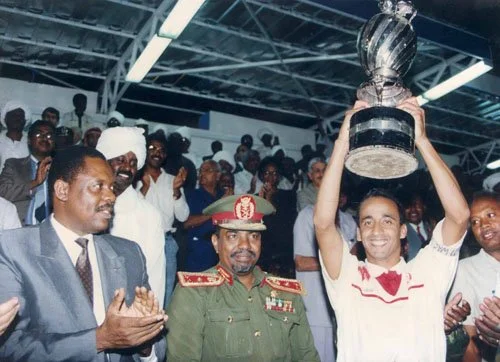
These victories crowned the long-term efforts of the late Abderrazak Mekouar, Wydad’s president from 1972 to 1993, who revolutionized the club’s management and influenced Moroccan football as a whole.
One of President Mekouar’s key initiatives was introducing player remuneration, making Wydad the first Moroccan team to adopt this practice.
At the end of the 1993 season, the emblematic president and several players left the club, either to play abroad, retire, or join other Moroccan teams.
Wydad thus entered a period of renewal but also doubt. Meanwhile, Raja Casablanca, the city’s other team, took advantage of this uncertainty to dominate the league between 1996 and 2001, winning its second and third African Champions League titles in 1997 and 1999, the latter being the last edition won by Raja.
During Raja’s dominance, Wydad won four Throne Cups, the latest in 2001. Thanks to this victory, Wydad participated in the African Cup Winners’ Cup (precursor to the CAF Confederation Cup), winning it by defeating Asante Kotoko in the final on the away goals rule: 1-0 home win in Casablanca and a 2-1 loss in Kumasi, Ghana.
Then, Wydad went through a period of doubt and instability between 2003 and 2014, during which the club won its first league title in 13 years in the 2005-2006 season. This season also saw the creation of the Ultras Winners, who became the world’s best ultras according to various rankings, becoming major club actors, especially in Casablanca. Wydad won the championship again in 2010 in a thrilling finish, securing first place on the final day after beating FUS Rabat and Raja’s loss to AS FAR in Rabat.
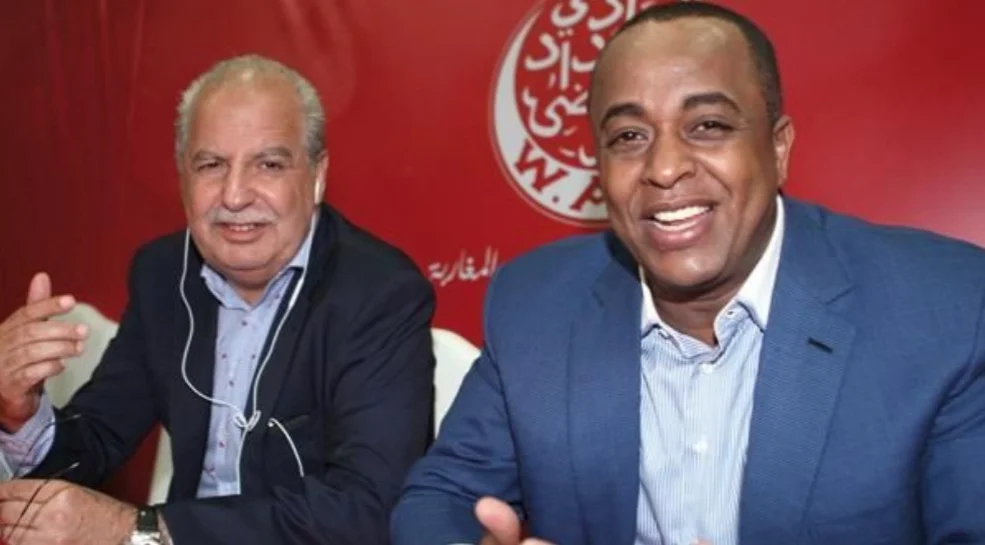
In 2014, Saïd Naciri was elected as the new president, succeeding Abdelilah Akram, who had to leave following a boycott by Wydad supporters criticizing his management.
President Saïd Naciri restored stability through a management style that, although authoritarian, proved effective. His strategy quickly bore fruit, and Wydad became a major African club attracting worldwide attention. Since 2015, Wydad has won the league five times and finished second at worst. The club also won two African Champions League titles, the first under Houcine Ammouta’s leadership and the second with Walid Regragui, who later became Morocco’s national team coach and led them to the 2022 World Cup semi-finals in Qatar.
To be continued…